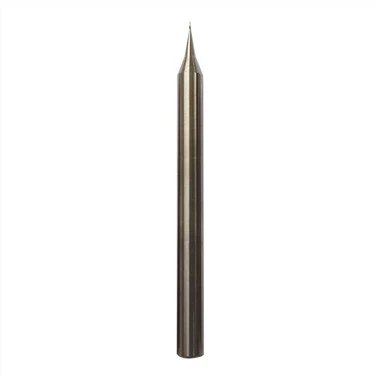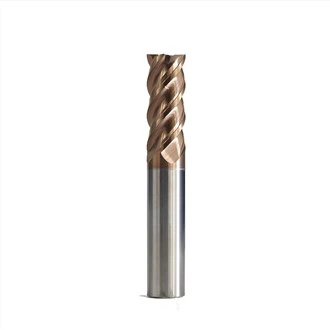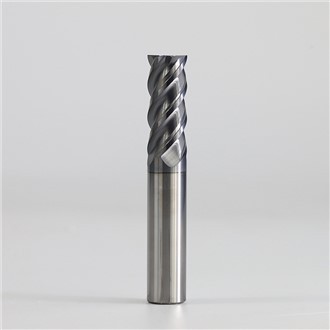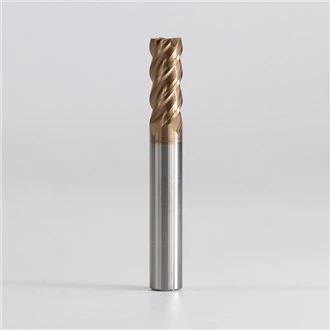
The cutting part of the tungsten steel milling cutter is composed of one or several teeth, which are distributed on the surface or end face of the rotating body. When cutting, it is intermittent. Therefore, the teeth are subjected to periodic impact force, which is easy to cause the tip to collapse. blade. The ceramic milling cutter has good wear resistance, and can process high-hard materials that are difficult or impossible to process by traditional tools. Small taper and high precision; prolong the service life of machine equipment.
In the cutting process of tungsten steel milling cutter, whether it is down milling or up milling, the thickness of the chip changes, so the cutting force during the cutting process also changes, and it is periodic, so it is easy to cause vibration of the process system; Compared with traditional tungsten steel cutters, the finish of ceramic milling cutters is more ideal, with high temperature resistance and good red hardness. It can be continuously cut at 1 200 ° C. Therefore, the cutting speed of ceramic tools can be much higher than that of cemented carbide. It can carry out high-speed cutting or realize "grinding by turning and milling", the cutting efficiency is 3-10 times higher than that of traditional tools, and the effect of saving man-hours, electricity, and number of machine tools is 30-70% or higher;
Cermet end mills are widely used in difficult-to-machine materials. Among them, difficult-to-machine materials, such as stainless steel, have high content of Cr and Ni. Although Cr can improve the strength and toughness of stainless steel, it increases the bonding tendency between stainless steel and the tool; N can It plays the role of stabilizing the structure, but the structure is plastic and easy to cause work hardening. The ceramic end mill is processed with a tungsten-cobalt carbide tool, but the processing effect is not very satisfactory.
When the tungsten steel milling cutter is up-milling, the tungsten steel milling cutter insert starts cutting from the zero chip thickness, which generates a high cutting force, which pushes the tungsten steel milling cutter and the workpiece away from each other. After the tungsten steel milling cutter insert is forcibly pushed into the kerf, it usually comes into contact with the machined hardened surface caused by the cutting insert, and at the same time produces a friction and polishing effect under the action of friction and high temperature. Cutting forces also lift the workpiece from the table more easily. When tungsten steel milling cutters are milling, the chip breaker sometimes sticks or welds to the cutting edge and gathers around the start of the next cutting edge. In up-cut milling, chip breakers are more likely to be trapped or wedged between the insert and the workpiece, causing the insert to break. In down milling, the same chip breaker is split in two so that the cutting edge is not damaged.